
"produced in Central America"
3000 article(s) found
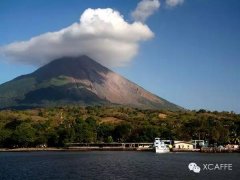
Lemon Tree Estate, Nicaragua
Nicaragua is located in the middle of Central America. It is the largest country in Central America. It borders Honduras in the north, Costa Rica in the south, the Caribbean Sea in the east and the Pacific Ocean in the west. Its eastern coastal plain, high temperature and rainy tropical marine climate, multi-jungle swamp; western coastal lowlands, there are more active volcanoes. The central and northern parts are highlands, with an annual average temperature of 18℃ and annual precipitation of 1500~2500 mm.

Introduction to Panamanian Coffee, the King of Coffee Price ratio in Central America
The unique and most important resource of Panamanian coffee is its microclimate. The east-west environment of the Republic of Panama converges cold air over 6500 feet through the Central Mountains, creating a variety of microclimates in the Boquete and Volcn Candela regions, making it a major producer of Panamanian coffee. These specialty coffees are located in the Baru volcano area.

Nicaraguan Coffee Los Congo Manor in Central America
Beautiful sour taste, moderate mellow Nicaraguan coffee belongs to the Central and South American style coffee, although the acidity is not very high, but it feels refreshing. The mellow degree is also not high, but the overall feeling is just right, neither thin nor too strong. To make it easier to accept. The taste of red wine can be vaguely felt in the shallow sour taste, which is also a major feature of Nicaraguan coffee.

Panama has the highest Baru Volcano coffee in Central America.
Panama has one of the highest volcanoes in Central America: Mount Baru. The Baru volcano has an altitude of more than 3474 meters, and the surrounding land is nutritious and balanced, providing sufficient conditions for the sowing and cultivation of Panamanian coffee. The cold air stream converges and flows above 2262 meters in the Central Mountains, thus creating more and more in the Bouquete and Volcan regions.

Description of Flavor and taste of boutique Coffee beans in El Salvador Coffee producing area
Republic of El Salvador, Repblica de El Salvador in Spanish, the Republic of El Salvador in English. It is located in Central America, bordering Guatemala and Honduras in the north, and the Pacific coastline in the west and south. The smallest country in Central America and the most densely populated country in Central America. The land area is 21393 square kilometers.
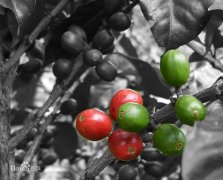
Guatemalan boutique coffee characteristics of Central and South America
Guatemala (Guatemala) aroma 3.5 minutes brightness 4.5 minutes mellow 3.5 minutes flavor 4.5 minutes aftertaste 4.5 points suitable for baking: Light/Medial/City shallow roasting, city degree can best show the characteristics of Guatemalan coffee, too deep will reduce the fruit flavor, if you like the smoky flavor, you can bake close to the second explosion, but still do not enter the second explosion as the principle. By

The coffee flavor of Santa Barara Manor in the San Juan Hido region of Honduras in northern Central America tastes good.
In Honduras, coffee-producing areas are divided into six major areas, spread to the west and south, namely Santa Barbara (Santa Barbara), El Paraiso (El Paraiso), Copan (Copan), La Paz (La Paz) and Comayagua (Olan Mound), with an average planting height of more than 1100 meters above sea level. The variety of coffee is Elaraby
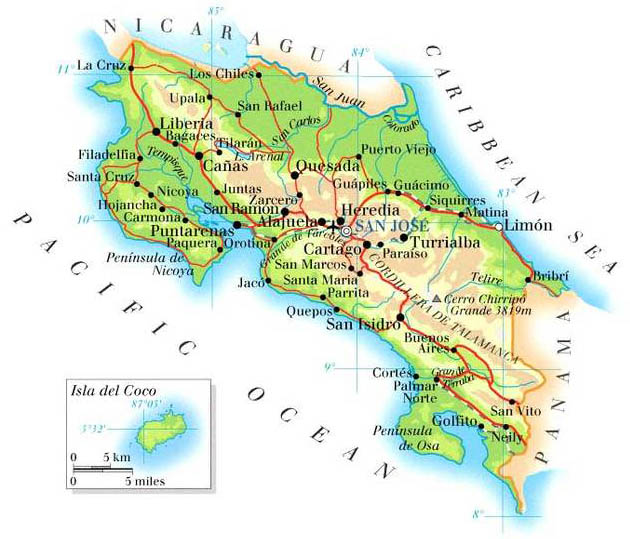
A big country of fine coffee in the south of Central America-- an introduction to the origin of Central American coffee in Costa Rica.
Guide to Caxiang: I haven't told you about the country where coffee is produced for a long time. Let's take a look at the coffee cultivation in Costa Rica today. The editor has something to say: Costa Rica first entered the editor's eyes when he did not know which year's World Cup, Costa Rica played against China, and then. China lost. Costa Rican coffee cultivation was introduced from Cuba in 1779 and only in 1820.
Coffee Bean Production-Central America-Nicaragua
Well-known representative coffee: Maragogipe (Maragogipe) Nicaragua coffee mainly grown in the central and northern, shade cultivation for its characteristics, coffee beans are washed, sun drying. Generally speaking, Nicaragua coffee is not very distinctive, ordinary Nicaraguan beans are often used for mixed coffee or instant coffee. But Nicaragua's Marag

Central America Switzerland-Costa Rican coffee beans, a big exporter of boutique coffee
For the exchange of professional baristas, please pay attention to the coffee workshop (Wechat official account cafe_style). For coffee, many people only recognize the amount of coffee consumed by Taiwanese. According to a NOWNEWS report, there are as many as NT $13.5 billion a year, but except for some coffee fans, many consumers only know lattes and cappuccinos, and they are very unclear about the coffee beans themselves. I guess Manning, Mamba, blue

Nicaragua coffee producing area coffee characteristics Why Nicaragua beans are often used for mixed coffee
Professional coffee knowledge exchange More coffee bean information Please pay attention to coffee workshop (Weixin Official Accounts cafe_style) Nicaragua, located in central Central America, is the largest country in Central America, north Honduras, south Costa Rica, east Caribbean Sea, west Pacific Ocean. Its eastern coastal plain, high temperature and rainy tropical marine climate, more jungle swamp; western
China Coffee Network recommends coffee bean producing area-Central America-Honduras (Honduras) washed bourbon
Well-known representative coffee: Honduran coffee seems strange to many coffee drinkers. When it comes to coffee production, the geographical conditions of Honduras are no less than those of neighboring coffee-producing countries such as Guatemala and Nicaragua. However, in the past, Honduras was more well-known in the consumer market because it did not have strong support in the handling and transportation of raw beans.

Eincht Manor has always been the pioneer of boutique coffee in Central America, so why is the coffee delicious?
For more information on coffee beans, please follow the Coffee Workshop (Wechat official account cafe_style) Eincht Manor Red Kadouai, Sun-treated Vivette South Fruit region El Injerto, Red Catuai, Natural Process, Huehuetenango Manor introduction Eincht Manor has always been a pioneer of fine coffee in Central America. About 50 years ago.

Central America Guatemala Coffee Bean Grade SHB
Coffee is the second largest commodity in the world after oil in trade. Arabica accounts for about 70% of the world coffee production, and about 10% of these 70% Arabica receive fine coffee called Specialty Coffee boutique coffee. Among these excellent coffee into the category of boutique coffee, 1% to 2% of the outstanding coffee are good enough to represent their own origin.

Which countries have the best coffee? which countries produce the most coffee? which are the big coffee producers?
For more information on coffee beans, please follow the coffee workshop (Wechat official account cafe_style) Coffee production Coffee grows in about 80 countries in South America, Central America, the Caribbean, Africa and Asia. Arabica coffee accounts for about 3/4 of global coffee cultivation. It grows in Latin America, Central Africa, East Africa, India and, to some extent,

A brief introduction to the flavor description region of El Salvador Himalayan coffee by variety treatment
Introduction to ElSalvador Himalayan Coffee Variety and Flavor description A brief introduction to El Salvador Himalayan Coffee Flavor description of El Salvador Himalayan Coffee Variety description A brief introduction to the flavor of El Salvador Himalayan Coffee varieties El Salvador is one of the small countries in Central America where the civil war caused chaos and affected economic development, but ironically allowed the ancient species of coffee to be preserved, and the situation was so chaotic that El Salvador coffee producers failed to catch up with the renewal of coffee varieties in Central and South America. El Salvador is one of the small countries in Central America.

Costa Rica Fire Phoenix Manor single bean species, brand recommendation and manor introduction
For the exchange of professional baristas, please follow the Coffee Workshop (Wechat official account cafe_style) Costa Rica Fire Phoenix Manor single bean varieties, brand recommendations and manor introduction of the national culture: Costa Rica has a variety of cultures, which is the confluence of Central and South America. When the Spanish conquered America in the 16th century, the northern part of Costa Rica was the most Mayan civilization.

Coffee Bean producing countries in North America-Coffee Flavor description Grinding scale Variety producing area
North American coffee bean producing country-Coffee Flavor description Grinding scale Coffee Variety region introduces this major coffee producing country in Central America, where the coffee tastes comfortable and charming fragrance. The Mexican coffees selected are Coatepec, Huatusco and Orizaba, among which Cottpe is considered to be one of the best in the world. With Mexico,

Introduction to Central American boutique coffee what is the flavor of coffee in the Caribbean?
Have you ever heard of a coffee belt? The so-called coffee belt refers to the area near the equator between the Tropic of Cancer and the Tropic of Cancer. This region is close to the equator and the innate climatic conditions are ideal, so most of the coffee producing areas in the world are in the "coffee belt". According to the world map, seven countries in Central America are in the coffee belt, including Belize, Guatemala, Honduras and Thrall.

Is the harvest time of Central American and Indonesian coffee beans the same as Colombian coffee in South America?
Generally speaking, the Central American producing region of the Northern Hemisphere or Aceh in Indonesia is the busiest harvest and post-production period in February and March every year, so the beans can be shipped to the consuming countries in May-October every year; Brazil in the southern hemisphere is the busiest harvest and post-harvest period every year from June to July, and the beans can arrive from September to April of the following year. Because of